
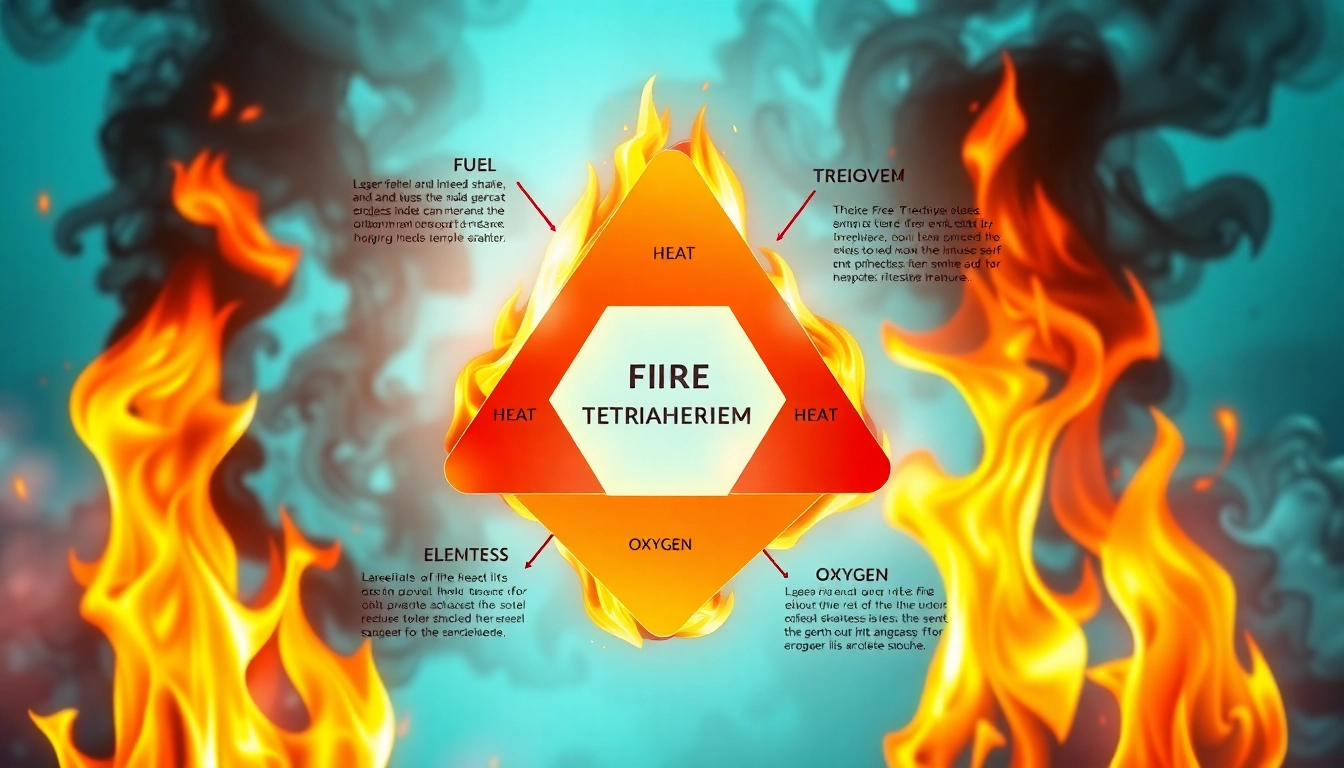
What is the Fire Tetrahedron?
Definition and Importance
The fire tetrahedron is a fundamental concept in fire science and safety that represents the four essential elements required for a fire to ignite and sustain itself. Unlike its predecessor, the fire triangle, which consists of heat, fuel, and oxygen, the fire tetrahedron adds a fourth component: the chemical chain reaction. This model is crucial for understanding fire behavior and controlling fire incidents effectively.
By identifying these four elements, firefighters and safety professionals can implement more effective fire prevention and suppression strategies. In essence, understanding the fire tetrahedron not only enhances safety protocols but also improves training practices for first responders.
History and Evolution
The origins of the fire tetrahedron can be traced back to the development of the fire triangle. The fire triangle was first recognized as a simple model to teach fire prevention, illustrating that heat, fuel, and oxygen are necessary for a fire to start. However, as research progressed, fire scientists realized that a chemical chain reaction happens in the combustion process, which warrants recognition as a separate element. This led to the evolution of the fire tetrahedron model, which is now widely used in fire safety education and training.
Over the decades, the understanding of fire dynamics has evolved, incorporating advancements in scientific research and fire engineering. The fire tetrahedron now serves as a cornerstone in fire prevention strategies and emergency response training, providing essential insights for various sectors, including industrial safety, wildland firefighting, and urban risk assessments.
Comparison with the Fire Triangle
The primary difference between the fire triangle and the fire tetrahedron is the inclusion of the chemical chain reaction as a critical fourth element in the tetrahedron model. The fire triangle specifically identifies heat, fuel, and oxygen, establishing that removing any one of these three will extinguish a fire. However, the tetrahedron acknowledges that within the fire itself, a chemical reaction is ongoing, which contributes to sustaining the fire once it has been ignited.
This distinction is vital because firefighting techniques also focus on disrupting this chemical chain reaction. For instance, common fire suppression agents, like foam or dry chemical extinguishers, act by interrupting the reactions that sustain combustion, effectively providing a more comprehensive strategy to eliminate a fire.
Components of the Fire Tetrahedron
Fuel: The Essential Element
Fuel is the substance that burns to produce fire. It can come in various forms, including solids (like wood and paper), liquids (like gasoline and alcohol), and gases (like propane and natural gas). Each type of fuel has a specific ignition temperature and combustion characteristics that directly influence fire behavior. Understanding the properties of different fuels is crucial for preventing fire incidents and formulating effective firefighting strategies.
For instance, solid fuels usually ignite at higher temperatures compared to flammable liquids, which may vaporize and produce ignitable concentrations of gases even at lower temperatures. Recognizing the fuel involved in any fire scenario helps responders determine the best approach to extinguish it without exacerbating the situation.
Heat: Ignition Point Explained
Heat refers to the energy required to increase the temperature of the fuel to its ignition point. The ignition point is the minimum temperature at which a fuel can catch fire. Heat can be generated by various sources, including open flames, electrical sparks, friction, chemical reactions, and even spontaneous combustion.
Understanding the role of heat in the fire tetrahedron is critical for fire prevention. For example, in industrial settings, controlling heat sources through proper insulation, equipment maintenance, and adhering to safety regulations can significantly reduce the risk of fire ignition. It’s also essential for first responders to assess heat levels when approaching a fire scene to gauge the risk of combustion and the potential for flashover.
Oxygen: The Fire’s Lifeblood
Oxygen is a vital component of combustion; it combines with the fuel during the chemical reaction to produce fire. The atmosphere typically contains about 21% oxygen; however, lower levels can induce smoldering fires or slow combustion, while higher concentrations can cause dramatic increases in fire intensity.
Fire prevention measures often incorporate strategies to minimize oxygen availability. For instance, in confined spaces where flammable materials are present, mitigating ventilation can prevent oxygen from feeding a fire, thus reducing the risk of ignition. Firefighting techniques frequently exploit this element by using techniques that starve flames of oxygen, such as smothering fires with fire blankets or using foam suppression agents to create barriers that keep air away from the flames.
Chemical Chain Reaction
Understanding the Fourth Component
The fourth element of the fire tetrahedron, the chemical chain reaction, is crucial for maintaining fire once it is ignited. This refers to the sequence of chemical reactions that occur as the fuel and oxygen react, releasing energy in the form of heat and light. It is a self-perpetuating process that requires the continuous presence of both fuel and oxygen.
Fire suppression techniques often target this component by interrupting the chain reaction. For example, water not only removes heat but also vaporizes and creates steam, which can fill the fire’s environment with less flammable gases, thereby disrupting the necessary reactions involved in sustaining the fire.
The Role of Reactions in Fire Maintenance
The chemical reactions involved in a fire are complex. Once a fuel vapor ignites, the heat produced initiates further reactions, continuously converting the fuel into more flammable gases and keeping the cycle going. This self-propagation is what makes fire so challenging to control.
Understanding how these reactions operate helps firefighters apply appropriate methods for extinguishment. For instance, the introduction of halon or dry chemical extinguishers disrupts the chain reaction at the molecular level, effectively stopping fire from spreading and enabling better control of the situation during firefighting operations.
How to Interrupt the Chain Reaction
Interrupting the chain reaction is key to extinguishing fires effectively. Firefighters can use various methods to disrupt this process, including cooling, smothering, and chemical interruption.
For cooling, water is commonly used due to its high latent heat of vaporization, absorbing substantial energy from the fire. Smothering can be achieved using materials that exclude oxygen, such as fire blankets or foam, while chemical extinguishers utilize specific compounds to interrupt the reaction at a molecular level, making the fire unsustainable.
For effective fire management, training firefighters to recognize the role of each element and the appropriate methods to disrupt a chain reaction can significantly enhance both safety and efficiency in tackling different fire scenarios.
Application in Fire Safety
Fire Prevention Strategies
Fire prevention strategies are grounded in the understanding of the fire tetrahedron. By identifying and managing each component, individuals and organizations can mitigate fire risks significantly. For example, ensuring that fuels are stored properly, controlling heat sources, and maintaining adequate oxygen levels can minimize the likelihood of ignition.
Implementing education programs that inform communities about fire safety – such as smoke detector installation, safe cooking practices, and ensuring electrical safety – can help populations stay aware and prepared, ultimately reducing incidents of fire outbreaks.
Effective Firefighting Techniques
Effective firefighting techniques leverage an understanding of the fire tetrahedron for practical applications. By recognizing the four essential elements, firefighters can devise tailored approaches based on the specific materials involved, the fire’s size, and its environmental conditions.
For instance, when facing a liquid fuel fire, responders might focus on smothering techniques to isolate the fire from oxygen while controlling the heat source. In contrast, a solid fuel fire may necessitate a methodical extinguishing method that targets both fuel removal and heat absorption.
Real-life Examples of Tetrahedron Applications
Numerous real-life scenarios illustrate the practical application of the fire tetrahedron. In industrial settings, safety protocols often dictate the storage of flammable materials away from ignition sources and ensure proper ventilation to prevent hazardous accumulation of gases. Effective emergency response requires understanding the specific fuels at play and how to address them based on their characteristics in the fire tetrahedron.
Another example is the recent innovations in firefighting technologies, where drone-assisted firefighting uses data to understand how best to attack a fire. These methods acknowledge all tetrahedron elements, enhancing response time and strategic deployment.
Frequently Asked Questions
What are the 4 elements of the fire tetrahedron?
The four elements of the fire tetrahedron are fuel, heat, oxygen, and the chemical chain reaction. Each component plays a role in ensuring fire ignition and sustenance.
How does the fire tetrahedron differ from the fire triangle?
The fire tetrahedron includes a fourth element, the chemical chain reaction, alongside heat, fuel, and oxygen, unlike the fire triangle, which only has three components.
What role does oxygen play in fire?
Oxygen is an essential element in fire, combining with fuel during combustion. It supports the fire’s reaction, making it critical for preventing and extinguishing fires.
How can we extinguish fire based on tetrahedron principles?
To extinguish a fire, you can remove any of the tetrahedron’s components. Techniques include cooling the heat, smothering to prevent oxygen access, or using chemicals to interrupt the chain reaction.
Are there any practical examples of the fire tetrahedron?
Practical examples include industrial safety protocols for flammable materials and specific firefighting techniques like using foam on liquid fires or water on solid fuels to control heat and oxygen contact effectively.